Understanding Officer-Like Qualities (OLQs) in SSB
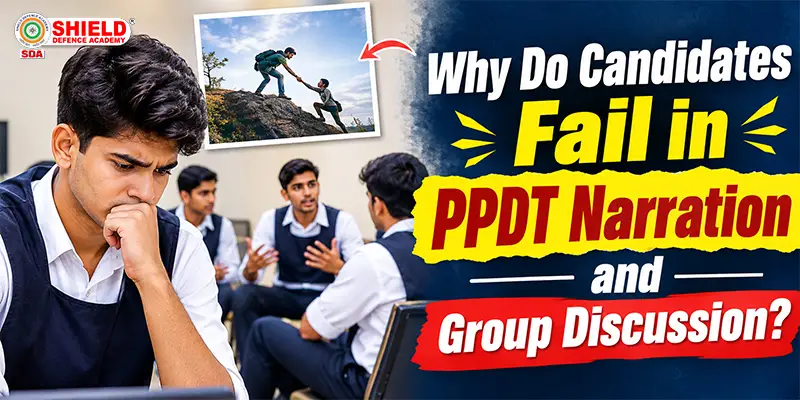
If you are preparing for the Services Selection Board (SSB) interview, you have probably heard the term Officer-Like Qualities (OLQs) countless times. But what do these qualities actually mean, and how can you demonstrate them during the Picture Perception and Description Test (PPDT) and Group Discussion (GD)? These are important questions because SSB is not simply an examination of academic knowledge or speaking ability. It is a structured assessment designed to understand your personality, intelligence, behaviour, and potential to take responsibility as a future officer in the Indian Armed Forces. According to the Indian Air Force’s published selection guidance, the initial screening stage includes the Officer Intelligence Rating (OIR) test and PPDT, while subsequent stages include psychological assessments, group testing, interviews, and a conference.
Understanding this structure helps you prepare with a clear purpose instead of treating every activity as an isolated test.
OLQs are commonly grouped into four broad factors: planning and organising, social adjustment, social effectiveness, and dynamic qualities. Together, these factors cover practical intelligence, logical reasoning, communication, teamwork, initiative, confidence, determination, and other characteristics associated with effective leadership. You do not need to act like a movie hero or dominate every conversation to demonstrate these traits. A candidate who listens carefully, understands a situation, suggests a practical solution, and respects other people’s contributions may demonstrate stronger leadership potential than someone who speaks continuously without adding value. The real objective is to show that you can think sensibly, work with people, make responsible decisions, and remain constructive when facing challenges.
Why OLQs Matter During SSB Screening
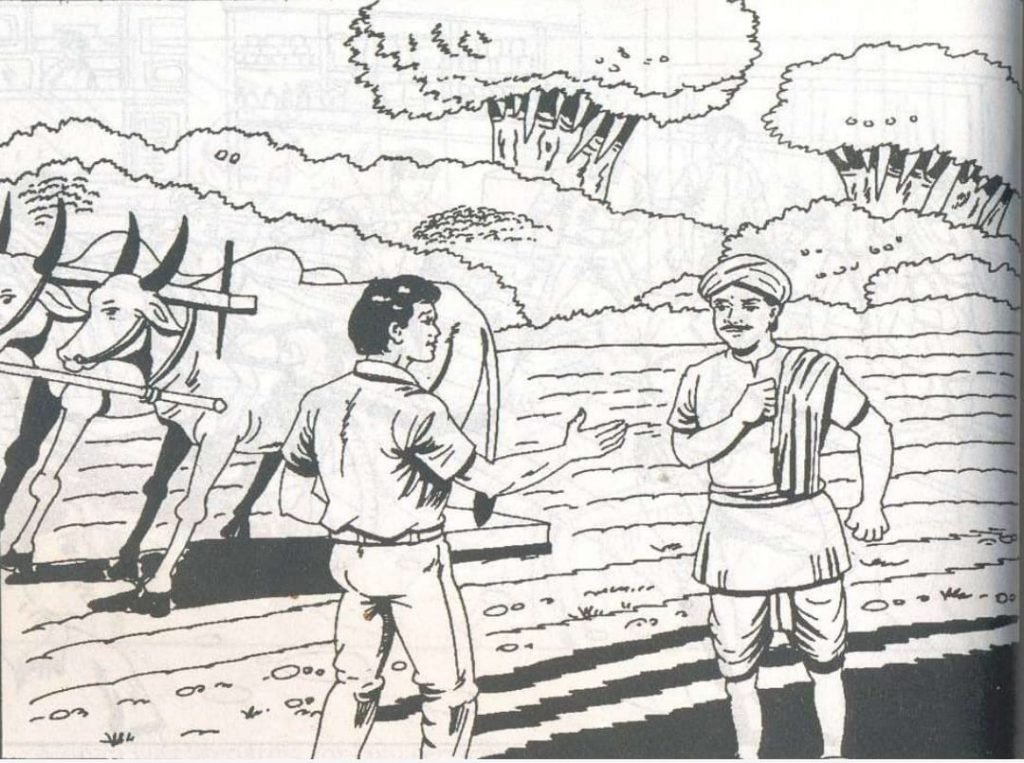
The screening stage is important because candidates must demonstrate sufficient potential to proceed to the next stage of selection. In the initial assessment, OIR and PPDT are considered together rather than as completely unrelated activities. PPDT gives candidates an opportunity to interpret a picture, develop a story, narrate their understanding, and participate in a group discussion. These activities can reveal how a candidate processes information, organises ideas, communicates under time pressure, and interacts with other people.
Your performance is not about producing the most dramatic story or delivering the loudest speech; it is about demonstrating clear thinking and constructive participation.
Think of OLQs as the foundation of a building. Intelligence and reasoning help establish a sound structure, communication makes the structure understandable to others, and social adaptability helps it function within a team. Initiative and determination enable you to move forward when circumstances become difficult, while responsibility keeps your decisions grounded in practical consequences. A weakness in one area does not necessarily define your entire personality, but repeated patterns of unhelpful behaviour can affect the overall impression you create. Therefore, your preparation should focus on developing consistent habits that support these qualities in everyday life, not merely memorising definitions before reporting to the SSB centre.
The 15 Officer-Like Qualities Assessed in SSB (OLQs)
The commonly recognised framework of 15 OLQs is organised into four factors that cover intellectual, social, and action-oriented aspects of personality. The framework helps explain why SSB candidates are assessed through different activities instead of relying on one written examination or interview alone. Official selection guidance describes the use of multiple assessment techniques, including psychological tests, group tasks, and personal interviews, to evaluate candidates holistically.
Although some qualities become especially visible during PPDT and GD, the broader assessment considers behaviour across the selection process. The following sections explain each factor and how you can develop its associated qualities through practical activities.
Factor 1 – Planning and Organising – OLQs
This factor includes Effective Intelligence, Reasoning Ability, Organising Ability, and Power of Expression. Effective intelligence means applying what you know to solve practical problems rather than simply remembering facts. Reasoning ability involves understanding information, identifying relevant details, comparing possibilities, and reaching logical conclusions. Organising ability is the capacity to arrange ideas, time, people, and available resources in a systematic manner. Power of expression refers to communicating your thoughts clearly enough for others to understand them, whether you are narrating a PPDT story, presenting an opinion in a GD, or explaining a plan.
You can demonstrate these qualities in a PPDT story by identifying the main character, understanding the situation, recognising a realistic problem, and describing practical action followed by a believable outcome. During a discussion, you can demonstrate reasoning by supporting your opinion with relevant arguments rather than repeating what another candidate has already said. Organising ability becomes visible when your points follow a sensible sequence and help the group understand the issue. To improve these qualities, practise short situation-based exercises, read reliable news reports, summarise events in your own words, and solve everyday problems independently. Remember that impressive vocabulary is not a substitute for sound reasoning. A simple, logical explanation is often more effective than a complicated answer that lacks substance.
Factor 2 – Social Adjustment – OLQs
The second factor consists of Social Adaptability, Cooperation, and Sense of Responsibility. Social adaptability means adjusting appropriately to different people, environments, and circumstances without abandoning your basic principles. Cooperation involves contributing towards a common objective, sharing useful ideas, and helping others work effectively. A sense of responsibility means understanding your duties, accepting the consequences of your decisions, and completing tasks rather than waiting for someone else to take charge. These qualities matter in defence services because officers work with people from different backgrounds and must coordinate their efforts towards shared objectives.
In PPDT group discussion, social adjustment can be seen when you remain composed despite disagreement, respect other candidates, and adapt your approach when someone introduces a better idea. Cooperation is demonstrated when you help the group move towards a common understanding instead of trying to make your own story win at any cost. Responsibility is reflected in staying focused on the task, presenting your points honestly, and avoiding behaviour that disrupts the discussion. You can develop these qualities by participating in team sports, college projects, volunteering, or group activities that require shared planning. When you make a mistake, acknowledge it and learn from it. Genuine teamwork does not mean agreeing with everybody; it means disagreeing respectfully while keeping the collective objective in mind.
Factor 3 – Social Effectiveness – OLQs
The third factor contains Initiative, Self-Confidence, Speed of Decision, Ability to Influence the Group, and Liveliness. Initiative means taking constructive action without constantly waiting for instructions. Self-confidence is the ability to express your thoughts and handle challenges without being paralysed by fear of making a mistake. Speed of decision refers to reaching a timely, sensible decision when circumstances require action. The ability to influence a group involves helping people understand an idea and encouraging productive progress, while liveliness reflects positive energy, alertness, and an engaged attitude. Together, these qualities help a candidate contribute actively without becoming aggressive or unnecessarily controlling.
During PPDT and GD, initiative might appear when you volunteer to begin the narration, introduce a relevant argument, or help the discussion return to the topic. Self-confidence is visible when you speak clearly even if other candidates hold different opinions. Decision-making becomes evident when you select a practical course of action instead of remaining confused between several possibilities. Influence is not about forcing others to accept your opinion; it is about presenting useful reasoning that encourages the group to consider a workable solution. Liveliness can be demonstrated through alert participation, a constructive attitude, and appropriate enthusiasm. Develop these qualities by practising short presentations, joining discussions, making everyday decisions independently, and reflecting on the results. The goal is balanced confidence: speak when you have something useful to contribute, and listen when someone else has a better idea.
Factor 4 – Dynamic Qualities
The fourth factor consists of Determination, Courage, and Stamina. Determination means continuing to work towards a worthwhile objective despite setbacks and difficulties. Courage involves facing challenges and acting responsibly even when a situation feels uncomfortable or uncertain; it does not mean taking unnecessary risks. Stamina refers to the ability to sustain physical and mental effort over time. These qualities are important in demanding environments where responsibilities may continue despite fatigue, obstacles, or unexpected changes.
In PPDT and GD, these qualities are less likely to be established through a single dramatic moment than through your overall approach to a task. Determination can be reflected in remaining engaged when a discussion becomes difficult or when your first suggestion is rejected. Courage may appear when you respectfully express a well-reasoned opinion that differs from the majority. Stamina can be supported by maintaining concentration during timed activities and preparing consistently instead of relying on last-minute practice. Build determination by setting achievable daily goals and completing them even when motivation is low. Develop courage through responsible challenges such as public speaking, taking ownership of mistakes, and addressing disagreements constructively. Maintain stamina through regular exercise, adequate rest, and disciplined routines suited to your health and fitness level. The strongest approach combines persistence with sound judgement rather than confusing stubbornness with determination.
OLQs Assessed During PPDT
The Picture Perception and Description Test is part of the initial SSB screening process. Candidates observe a picture, develop an interpretation and story, narrate it, and take part in a group discussion. The activity provides a limited time in which to observe details, organise thoughts, communicate an interpretation, and respond to different viewpoints. The Indian Air Force identifies PPDT as part of Stage I alongside the OIR test.
For candidates, the practical lesson is straightforward: preparation should improve observation, reasoning, storytelling, and communication rather than encourage memorised plots that can be inserted into every picture.
Picture Perception and Story Writing
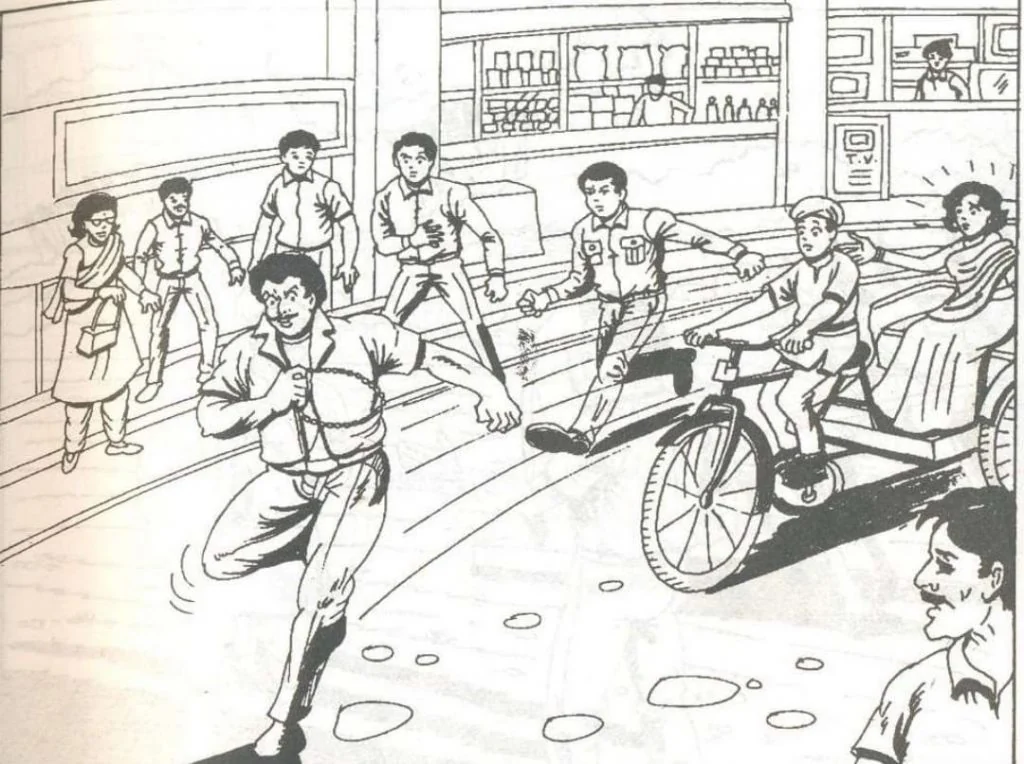
The first part of PPDT requires you to observe the picture carefully and construct a coherent story from the available information. Candidates commonly practise identifying the main character, understanding the apparent situation, recognising a problem or objective, describing constructive action, and presenting a plausible outcome. The key is to create a story that makes sense in the context of the picture instead of inventing unnecessary drama. If the image appears to show people gathered near a road, for example, you might develop a realistic story about a young volunteer organising assistance after a minor traffic incident, provided the details you describe fit your interpretation of the image.
Your story can reveal how you organise information and approach a problem. A clear sequence of events demonstrates organising ability, while realistic actions can reflect effective intelligence and reasoning. A protagonist who takes appropriate responsibility may provide a natural opportunity to show initiative, cooperation, or determination. However, do not assume that every story must feature a military operation, a rescue mission, or an extraordinary achievement. Ordinary situations can demonstrate useful qualities just as effectively when the character’s actions are logical and credible. Practise writing different kinds of stories, including community activities, education, teamwork, problem-solving, and everyday responsibilities. After each exercise, check whether the character’s objective is clear, whether the actions are practical, and whether the ending follows naturally from the events.
Narration and Group Discussion in PPDT
After preparing the story, candidates narrate it and participate in a group discussion. This stage tests more than the ability to speak without hesitation. You need to communicate the main events clearly, keep your explanation organised, and remain composed when other candidates offer different interpretations. Narration should generally focus on the central character, the situation, the action taken, and the outcome. Avoid spending so much time describing minor visual details that you cannot explain the actual story. Speaking at a manageable pace and using straightforward language can help the assessors understand your ideas.
The discussion introduces an additional challenge: you must communicate within a group where several people may want to speak at the same time. Cooperation and social adaptability become important because the objective is not simply to defend your individual story. Listen to other candidates, identify common points, and contribute ideas that help the group develop a shared understanding. If your interpretation differs from another person’s, explain your reasoning calmly rather than criticising their intelligence or interrupting repeatedly. You can show initiative by introducing a useful point and influence by helping the group consider a practical conclusion. Remember that the precise assessment is broader than any single behaviour; speaking frequently, for example, does not automatically prove leadership, and speaking less does not automatically mean a candidate lacks potential.
OLQs Assessed During Group Discussion (GD)

Group Discussion is an important opportunity to demonstrate how you communicate, reason, cooperate, and respond to different opinions. In the broader SSB process, group testing helps assess candidates in interactive situations rather than relying entirely on written responses.
A discussion may involve a current-affairs issue, a social problem, or another topic that requires participants to exchange views. Your aim should be to contribute relevant ideas, listen carefully, and help the conversation progress. A good participant does not need to speak first on every occasion or have an answer to every question. Instead, the candidate demonstrates sound judgement by knowing when to contribute, how to explain an opinion, and when to reconsider an argument.
Communication, Cooperation, and Leadership
Power of expression is one of the most visible qualities during GD because you must explain your ideas in a way that other participants can understand. You can improve it by using a simple structure: state your point, explain the reason behind it, and provide a relevant example. For instance, if the topic concerns youth employment, you might discuss skill development, practical training, and cooperation between educational institutions and employers. This approach is more useful than repeating broad statements without explaining how they address the issue. You do not need an artificial accent or overly complicated English to communicate effectively. Clarity, relevance, and composure matter more than trying to sound impressive.
Cooperation and leadership are closely connected during group discussions. A cooperative candidate respects different viewpoints, acknowledges useful arguments, and avoids turning the exercise into a personal contest. Leadership can emerge when someone identifies the central issue, offers a logical direction, or helps bring the group back to the topic after an unproductive exchange. Consider a discussion in which several candidates disagree about whether technology creates more jobs than it replaces. Rather than dismissing one side, you could explain that technology may reduce demand for certain roles while creating opportunities in other sectors, depending on skills, investment, and the pace of adaptation. This balanced contribution may help the group examine the issue more constructively. Effective leadership is therefore not simply about controlling the conversation; it is about making a useful contribution to the collective task.
Practical Preparation Strategies for SSB Aspirants
Developing OLQs requires consistent practice, honest self-assessment, and real-life experience. Reading a list of qualities can help you understand the framework, but memorisation alone cannot replace the ability to apply those qualities in unfamiliar situations. A practical preparation routine should include observation exercises, story writing, current-affairs reading, speaking practice, physical activity, and teamwork. You can practise independently and with fellow aspirants, provided you focus on improving genuine habits instead of learning scripted responses. Keep track of recurring weaknesses, such as unclear narration, poor listening, unsupported arguments, or difficulty making decisions under time pressure. Once you identify a weakness, practise it deliberately and review your progress regularly.
A useful daily routine could include 10–15 minutes of reading reliable news, one short PPDT story, a timed narration, and a discussion with a friend or study group. After the discussion, ask whether your arguments were relevant, whether you listened to others, and whether your participation helped the group. You can also practise summarising a news story in one minute, explaining both sides of an issue, and suggesting a realistic solution to a common problem. Team sports, college societies, volunteering, and organising small events offer opportunities to develop cooperation and responsibility outside formal coaching. Regular exercise can support physical stamina, while sufficient sleep helps maintain concentration. Treat these activities as ways to build sustainable habits, not as a formula that guarantees SSB recommendation.
Common Mistakes to Avoid During PPDT and GD
One common mistake is trying to dominate the discussion. Speaking continuously may prevent you from listening properly, while repeatedly interrupting others can make your contributions less constructive. Another mistake is memorising dramatic PPDT stories and forcing them onto pictures that do not support those events. A believable story with a clear objective and practical action is preferable to an exaggerated narrative that lacks a logical connection to the image. Candidates should also avoid assuming that a particular protagonist, profession, or heroic achievement is mandatory. The aim is to interpret the situation thoughtfully and construct a coherent account, not to demonstrate imagination without regard for reality.
Other mistakes include using unnecessarily complicated language, making unsupported claims, criticising other candidates personally, and changing an opinion simply because the majority disagrees. Silence caused by fear can prevent you from sharing useful ideas, but speaking merely to increase your participation count is not a reliable solution either. Prepare by improving the quality of your contributions and learning to enter a discussion naturally. If you make an error during narration or express a weak argument, remain composed and move forward rather than allowing one mistake to affect your entire performance. Most importantly, avoid trying to manufacture an artificial personality. Consistent behaviour, genuine teamwork, and thoughtful decision-making are more useful foundations for preparation than tricks intended to create a particular impression.
Conclusion
Understanding OLQs for SSB and the qualities assessed in PPDT and GD can help you prepare more effectively for the selection process. The 15 Officer-Like Qualities cover four broad areas: planning and organising, social adjustment, social effectiveness, and dynamic qualities. PPDT gives you an opportunity to demonstrate observation, reasoning, storytelling, communication, and group interaction, while GD allows you to practise expressing opinions, listening, cooperating, and contributing towards a shared objective. Neither activity should be approached as a performance in which you try to imitate a stereotypical officer. Instead, focus on developing sound judgement, practical thinking, confidence, responsibility, and respect for others.
Start with small, consistent improvements. Read regularly, practise realistic PPDT stories, discuss current affairs, participate in team activities, and review your behaviour honestly. Learn to speak clearly without dominating, disagree without becoming hostile, and take initiative without ignoring other people’s contributions. Remember that SSB assessment considers your overall performance across different techniques, not just one impressive story or discussion.
Build habits that reflect the qualities you want to demonstrate, and approach the selection process with discipline, authenticity, and a willingness to learn.
Frequently Asked Questions (FAQs)
1. What are OLQs in the SSB interview?
OLQs, or Officer-Like Qualities, are 15 qualities grouped into four factors: planning and organising, social adjustment, social effectiveness, and dynamic qualities. They cover practical intelligence, reasoning, communication, cooperation, responsibility, initiative, confidence, determination, courage, and stamina. Assessors consider evidence of these qualities across different stages of the SSB selection process.
2. Which OLQs are most important in PPDT?
PPDT can provide opportunities to demonstrate effective intelligence, reasoning ability, organising ability, power of expression, social adaptability, cooperation, initiative, and self-confidence. However, no single quality should be treated as the only requirement for success. Your story, narration, and discussion contribute different evidence about your approach to the task.
3. How can I demonstrate leadership during PPDT group discussion?
Demonstrate leadership by contributing relevant ideas, listening carefully, encouraging constructive discussion, and helping the group identify common ground. Avoid interrupting others or attempting to control every part of the conversation. Leadership is better demonstrated through useful contributions and responsible behaviour than through speaking the most.
4. Can I improve my OLQs before attending SSB?
Yes. You can work on relevant habits through regular reading, problem-solving exercises, public speaking, teamwork, physical fitness, and taking responsibility for everyday tasks. Honest self-assessment can help you identify areas that need improvement. Focus on sustained development rather than memorising scripted answers or trying to imitate another candidate.
5. Is fluent English compulsory for performing well in PPDT and GD?
Clear communication is important, but using complicated English or an artificial accent is unnecessary. Focus on understanding the topic, organising your thoughts, speaking understandably, and listening to other candidates. Practise speaking in English if it is the language you intend to use, while prioritising clarity, confidence, and relevant reasoning.