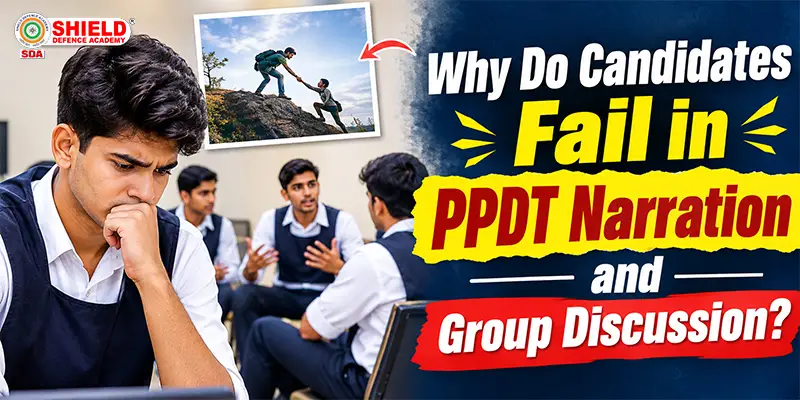
Understanding PPDT in the SSB Screening Process
The Picture Perception and Discussion Test (PPDT) is an important part of the Services Selection Board (SSB) screening process for candidates aspiring to become officers in the Indian Armed Forces. It assesses how candidates interpret a visual situation, develop a story, communicate their ideas and interact with other candidates. PPDT is not simply a test of English fluency or creative writing. It also gives assessors an opportunity to observe a candidate’s approach to a problem, ability to organise thoughts and behavior in a group. According to the published SSB selection procedure, Stage I includes the Officer Intelligence Rating (OIR) test and PPDT, and screening decisions consider performance across these components.
Many aspirants prepare for months for the NDA, CDS or AFCAT written examination but spend comparatively little time practising the communication and group-interaction skills required during SSB screening. As a result, they may know the basic procedure yet struggle when they must narrate a story in front of unfamiliar people or participate in a fast-moving discussion. Think of PPDT as a combination of observation, organised thinking and communication under pressure. A candidate who understands the picture but cannot explain the story clearly may struggle to make their ideas understood, while someone who speaks confidently but ignores the picture may produce an unrealistic narrative. Effective preparation needs to develop both the quality of the story and the ability to express it naturally.
The Purpose of Picture Perception and Story Writing
In PPDT, candidates observe a picture, usually presented briefly, and construct a story based on the visible situation. They must interpret the characters, setting, possible problem and likely course of action without inventing unnecessary details. The objective is to create a coherent narrative that connects the observed situation to a practical outcome. A useful story generally has a clear main character, a realistic objective, purposeful action and a believable result. The candidate should not treat the exercise as an opportunity to write a dramatic film script; a straightforward story with sensible decisions is often easier to explain and defend.
Consider a picture showing a few people near a road, with one person appearing to need assistance. Instead of creating an elaborate story about a major accident, a candidate could describe how a young student notices an injured person, seeks help from nearby adults and arranges medical assistance. The story should be based on what can reasonably be inferred from the image, rather than on imaginary events that have no connection to it. During preparation, candidates should practise identifying the central situation quickly and deciding what the main character can realistically do. Repeated practice helps them develop a more systematic approach to unfamiliar pictures, reducing the temptation to panic or write a story that does not fit the scene.
How Narration and Group Discussion Work
After writing the story, candidates are asked to narrate it individually and then participate in a group discussion. The exact instructions, timing and format can vary, so candidates should follow the directions given by the SSB centre. During narration, the candidate needs to communicate the essential details of the story in a limited period, making the sequence of events understandable to listeners. The group discussion then requires candidates to exchange interpretations and work towards a common understanding or story. These stages create different challenges: narration tests individual expression, while discussion requires the candidate to listen, contribute, respond and cooperate.
The important point is that success in one part does not automatically guarantee success in the other. Someone may narrate a well-structured story but become aggressive when other candidates disagree with it. Another candidate may have a sensible interpretation but remain silent throughout the discussion. Both situations can prevent the candidate from demonstrating their full potential. Preparation should therefore include timed narration practice as well as discussions with different people, including participants who have different opinions. The goal is not to memorise a perfect performance but to develop the ability to think clearly, express ideas and adapt to the group without losing composure.
Why Candidates Fail in PPDT Narration
One common reason candidates struggle with PPDT narration is that they focus too heavily on how they sound instead of what they are communicating. They worry about their accent, vocabulary, grammar, posture and the reactions of other candidates. This creates unnecessary pressure and makes it harder to remember the sequence of their own story. Some aspirants speak rapidly to finish before their time runs out, while others pause repeatedly because they have not organised their thoughts in advance. The solution is to practise presenting a simple, logical story rather than attempting to impress everyone with complicated English.
Narration is also difficult for candidates who have never spoken regularly in front of a group. They may be comfortable discussing topics with friends but feel uncomfortable when several unfamiliar people are listening. Their voice becomes quieter, their sentences become fragmented, and they may lose track of the central character’s actions. These problems usually improve through repeated practice, constructive feedback and realistic mock sessions. Candidates should record their narrations, listen for unclear sentences and practise speaking at a steady pace. The objective is not to eliminate every minor grammatical mistake; it is to communicate the story clearly enough that listeners can understand its central situation, action and outcome.
Poor Story Structure and Unrealistic Thinking
A story without a clear beginning, middle and ending can be difficult to narrate and even harder for the group to discuss. Some candidates describe the picture without developing any meaningful action, while others introduce several unrelated events that distract from the main situation. For example, a story may begin with a student visiting a village, suddenly introduce a natural disaster and end with the student receiving a national award, without explaining how one event leads to the next. Such a narrative feels disconnected because its events do not form a believable sequence.
A practical method is to organise the story around four questions: Who is the main character? What situation or problem does the character face? What constructive steps does the character take? What realistic result follows? These questions provide a useful framework without forcing every story into an identical formula. Candidates should also avoid assuming that every picture depicts an emergency, a crime or a heroic rescue. Ordinary situations involving education, community work, sports, teamwork or problem-solving can provide equally meaningful stories when they fit the image. A believable story demonstrates that the candidate can interpret information sensibly instead of relying on dramatic inventions.
Lack of Confidence and Communication Skills
Confidence problems often become visible through a weak voice, excessive hesitation, poor pacing or difficulty maintaining a steady delivery. Some candidates know their story but speak so softly that listeners struggle to follow it. Others rush through every sentence, hoping that speed will make them appear confident. In reality, fast speech can hide the logic of the story and make important details difficult to understand. Candidates should practise speaking at a comfortable pace, finishing sentences clearly and pausing briefly between major ideas.
Communication skills can improve through short, consistent exercises. Read a short news report, explain its main points aloud and summarise it in your own words. Then practise narrating a PPDT story without reading a prepared script. Ask a friend or mentor to identify where your explanation becomes confusing or difficult to hear. If English is a challenge, focus on simple, correct sentences rather than memorising advanced vocabulary that you cannot use naturally. A candidate who explains an idea clearly in ordinary language can communicate more effectively than someone who uses impressive words without a coherent message. Confidence should come from preparation and familiarity with the task, not from pretending to have no nervousness.
Common Narration Mistakes
Another reason candidates struggle is that they concentrate on minor presentation details while neglecting the content of the story. They may spend too much time describing the characters’ clothes or appearance, repeat the same sentence several times, or add background information that does not advance the plot. Some candidates memorise a standard story and try to adapt it to every picture, even when the details do not fit. Others begin strongly but forget the ending because they have not practised completing their narration within the allotted time.
To improve, practise identifying the most important details and leaving out information that contributes little to the narrative. Your story should be specific enough to explain the situation but concise enough to follow easily. Avoid exaggerated claims about the main character’s achievements or abilities when the picture provides no reasonable basis for them. If you forget a sentence during narration, do not stop completely or apologise repeatedly. Continue with the next logical point and finish the story calmly. Mock practice should reproduce the time pressure of the actual exercise, while feedback should focus on clarity, relevance, logical sequence and the ability to finish within the instructions provided.
Why Candidates Fail in PPDT Group Discussion
The group discussion creates a different kind of pressure because every candidate wants their interpretation to be heard. A discussion can become noisy when several people begin speaking simultaneously, and candidates may feel that they must interrupt others to get noticed. Some react by increasing their volume, repeating the same point or rejecting every alternative story. Others become discouraged when their first contribution is overlooked and decide not to participate again. Both approaches can make it difficult for them to demonstrate effective group behavior.
A productive discussion is not a competition to see who can speak the most. Candidates should identify common elements in the group’s stories, contribute a practical suggestion and respond constructively when someone adds useful information. If the group has identified a student helping a community, for instance, participants can discuss the main character’s objective, the steps taken and the likely outcome rather than arguing over irrelevant details. When there are differences of opinion, the candidate should explain their reasoning briefly and remain open to a reasonable alternative. The aim is to help the group move forward while still contributing individual ideas.
Speaking Too Much or Remaining Silent
Two contrasting mistakes appear frequently during practice sessions. The first is dominating the discussion: a candidate interrupts others, repeats points that have already been made and attempts to control every decision. The second is staying silent because the candidate is afraid of making a mistake or being criticised. Neither extreme provides a good opportunity to demonstrate balanced communication. A useful contribution does not have to be long; a single relevant point can help clarify the group’s direction or resolve a disagreement.
Candidates should look for natural opportunities to speak and make each contribution purposeful. If the group has identified a common setting but has not agreed on the main action, suggest a practical sequence of events. If several participants are repeating the same argument, summarise the points of agreement and propose a way to move forward. If you have already contributed several times, allow others to speak rather than trying to occupy every gap in the conversation. Candidates who are initially shy can start with short, well-organised observations and gradually practise more active participation. The objective is to contribute meaningfully, not to achieve an arbitrary number of speaking turns.
Arguing Instead of Cooperating
Candidates sometimes become attached to their own story and treat alternative interpretations as personal criticism. When another candidate proposes a different main character or outcome, they may respond defensively, interrupt or insist that their version must be accepted. This turns a collaborative exercise into an argument and can prevent the group from building a common narrative. An SSB group discussion should not be approached as a debate in which one person must defeat everyone else.
A better response is to identify what is useful in another candidate’s suggestion and connect it with the existing discussion. You might say that both interpretations share the same setting and objective, then suggest a common sequence that includes the most relevant points. If the group chooses a different direction from your original story, you can still contribute by helping improve its logic. Cooperation does not mean agreeing with every statement or remaining passive; it means expressing disagreement respectfully and focusing on the group’s task. Candidates should practise accepting reasonable corrections, changing their approach when necessary and avoiding personal remarks. These behaviours make discussion more productive and allow the group to reach a conclusion without wasting time on unnecessary conflict.
Poor Listening and Teamwork
Listening is an active skill, not simply the absence of speaking. Candidates who prepare their next sentence while another person is talking may miss useful information, misunderstand the argument or repeat a point that has already been discussed. Similarly, a candidate who ignores quieter participants may miss a practical idea that could help the group reach agreement. Poor listening can create the impression that the person is interested only in being noticed rather than in solving the shared problem.
To improve teamwork, pay attention to the ideas being expressed and respond directly to them. Acknowledge a useful suggestion, clarify an unclear point or identify a connection between two different interpretations. When the discussion becomes disorganised, propose a concise summary of what the group has agreed upon and what still needs to be decided. Do not attempt to manage every participant or act as if you have been formally appointed leader. Leadership can be demonstrated through useful initiative, sensible communication and support for a shared objective. The strongest practice groups are those in which candidates learn to contribute while making space for others, rather than competing to dominate the conversation.
What SSB Assessors Look For
The SSB selection process considers a candidate’s performance across different assessment methods, including psychological tests, GTO tasks and the personal interview. Official selection information describes an overall assessment rather than a decision based on one isolated performance detail.
For PPDT, candidates should therefore avoid believing that one particular speaking trick, memorised story or aggressive discussion style guarantees screening. It is more useful to prepare for the task itself: interpret the picture carefully, create a sensible narrative, communicate clearly and interact constructively with the group.
Candidates should also remember that assessors observe behavior in context. A loud voice by itself does not establish leadership, just as a quiet speaking style does not automatically mean a candidate lacks potential. What matters is whether the candidate’s contribution is relevant, understandable and appropriate to the situation. Preparation should build the ability to make decisions under time pressure, listen when others speak, remain composed when challenged and adjust to changing circumstances. These are practical skills that can be developed through repeated exercises, honest self-assessment and feedback from people who can identify specific areas for improvement.
Clarity, Initiative and Practical Thinking
Clarity means communicating an idea in a way that other people can understand without needing to guess what you mean. Initiative means recognising when a useful contribution is needed and taking appropriate action without waiting indefinitely for someone else. Practical thinking means choosing a believable course of action that fits the information available. These qualities work together during PPDT: the candidate needs to interpret a picture, develop a reasonable response and explain that response to other people.
Imagine a discussion in which five candidates have proposed different endings to the same story. Rather than arguing that only one ending is correct, a candidate could identify the common objective and suggest the most realistic outcome based on the picture and discussion. This contribution demonstrates logical organisation and helps the group make progress. Candidates can develop these skills by practising with unfamiliar pictures and changing discussion partners regularly. They should review whether their stories make sense, whether their contributions add something useful and whether they listen effectively. The aim is not to imitate a supposed ideal officer personality, but to develop genuine communication, responsibility and problem-solving habits.
How to Improve PPDT Performance
Improving PPDT performance requires a structured routine that develops observation, storytelling, narration and group communication together. Reading tips can help candidates understand the process, but improvement comes from applying those tips repeatedly under realistic conditions. A candidate who practises only writing stories may still struggle when asked to speak in front of others, while someone who focuses exclusively on speaking may develop a habit of presenting weak or unrealistic narratives. The most effective preparation combines individual exercises with group practice and honest performance reviews. Each session should have a clear objective, such as improving story structure, reducing hesitation or learning to respond calmly when another participant disagrees.
Candidates should also track their progress rather than relying on a general feeling of confidence. After every practice session, identify one strength and one weakness. Perhaps your story was logical, but your narration was too fast; perhaps your speaking was clear, but you interrupted others during the discussion. Choose one improvement target for the next session and evaluate whether you made progress. Over several weeks, this approach can help candidates recognise recurring mistakes and develop better habits. The goal is steady improvement, not a flawless performance in every practice round.
A Practical Daily Preparation Routine
A simple daily routine can make PPDT preparation manageable even for candidates balancing written examinations, college studies or other responsibilities. Begin with a short observation exercise using an unfamiliar picture. Identify the characters, setting, possible situation and main action before developing a concise story. Then narrate the story aloud under a time limit appropriate to the instructions you are practising. Focus on a logical sequence, an audible voice and clear sentences rather than memorising every word. Finally, discuss the same picture with a partner or small group and observe how well you listen, contribute and adapt your ideas.
A useful weekly plan can include several individual narration sessions, multiple group discussions and one longer mock screening exercise. Use different pictures and discussion partners to avoid becoming dependent on familiar examples. You can also practise summarising a current-affairs article in your own words, which helps develop organised thinking and concise expression. Review recordings when possible and ask a mentor to provide specific feedback rather than simply saying that your performance was good or bad. Most importantly, do not measure your progress only by how much you speak. Measure it by the relevance of your ideas, the clarity of your narration, the realism of your story and your ability to help the group work constructively.
How Shield Defence Academy Helps Candidates Prepare
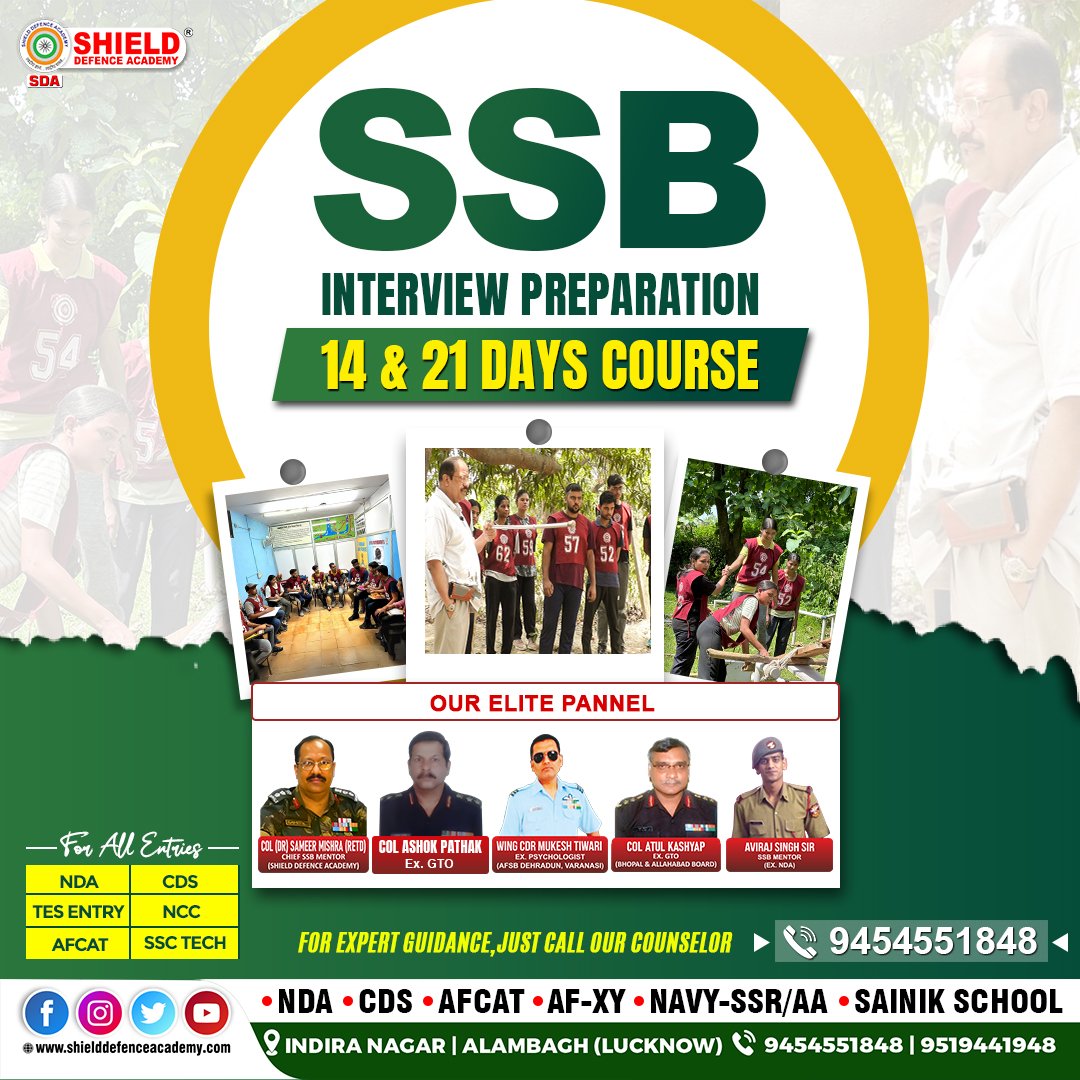
For candidates looking for structured SSB coaching in Lucknow, Shield Defence Academy offers preparation covering PPDT, narration, group discussions and other aspects of SSB readiness. Its published SSB coaching information describes practice in OIR, story writing, group discussion strategies, psychological tests, GTO activities and personal interview preparation. The academy also describes mock exercises and feedback as part of its preparation approach.
These areas are relevant for candidates who understand the selection process but need more practice applying their knowledge under time pressure.
The value of structured coaching lies in identifying the specific reason a candidate is struggling. One aspirant may need help creating a realistic story, another may have difficulty speaking audibly, and a third may need to improve listening and teamwork during group discussions. Practising in a group allows candidates to experience interruptions, competing viewpoints and the pressure of speaking before unfamiliar people. With suitable feedback, they can identify habits that are difficult to notice when practising alone. Candidates should ask prospective coaching institutes about the frequency of mock PPDT sessions, opportunities for individual narration, the quality of feedback and whether instructors track progress over time. These questions help them assess whether a programme matches their preparation needs.
Shield Defence Academy’s published SSB Coaching in Lucknow page provides further information about its preparation programme. Aspirants can review the available training details and contact the academy to confirm the current schedule, fees and facilities before enrolling.
Building Confidence Through Realistic Mock Practice
Mock practice is especially valuable because it helps candidates become familiar with the pressure of performing in front of others. During a realistic exercise, a candidate must observe a picture, construct a story, narrate it and participate in a discussion without relying on unlimited preparation time. This reveals problems that may remain hidden during casual practice at home. For example, a candidate might write excellent stories but forget key details when speaking aloud, or may communicate confidently with friends but struggle when others challenge their ideas. Repeating the entire process helps candidates identify and address these weaknesses.
The feedback after a mock session should be specific and actionable. Instead of telling a candidate to be more confident, a mentor can explain that the voice was difficult to hear, the story lacked a clear outcome or the candidate interrupted others before understanding their points. The candidate can then practise that particular skill in the next session. Shield Defence Academy’s published training information includes PPDT practice and discussion-based preparation, which are useful areas for aspirants to investigate when selecting an SSB coaching programme.
Remember that coaching is a means of improving preparation, not a guarantee of selection. Individual effort, consistent practice and the ability to apply feedback remain important.
Conclusion
Candidates fail to perform well in PPDT narration and group discussion for several reasons, including weak story structure, unrealistic interpretations, nervous speaking, poor listening and an excessive desire to dominate the group. These problems are not necessarily permanent weaknesses. With regular practice, candidates can learn to organise their thoughts, narrate their stories clearly, contribute relevant ideas and respond constructively to different viewpoints. The key is to understand that PPDT involves both individual expression and group interaction, so preparing for only one part leaves an important gap.
For aspirants preparing for NDA, CDS and other officer-entry pathways, PPDT practice should be part of a broader SSB preparation plan. Focus on realistic stories, clear communication, sensible decisions and genuine cooperation rather than memorising supposedly perfect answers. Structured mock sessions and individual feedback can help identify weaknesses before the actual selection process. Shield Defence Academy in Lucknow is one option candidates can explore for PPDT and SSB preparation. Ultimately, the aim is to become a more capable communicator and problem-solver, not simply to learn a performance that works for one particular picture.
Frequently Asked Questions (FAQs)
1. Why do candidates fail PPDT narration in SSB?
Candidates may struggle because of unclear stories, poor narration structure, low speaking volume, excessive hesitation or difficulty completing their story within the allotted time. Some focus so much on English fluency that they forget to communicate the main situation and outcome. Regular timed practice, simple language and constructive feedback can help address these issues.
2. How can I improve my PPDT group discussion skills?
Practise with a small group using unfamiliar pictures and different interpretations. Make relevant contributions, listen carefully, avoid unnecessary interruptions and help connect ideas when the discussion becomes disorganised. Do not focus on speaking the most; focus on contributing something useful and helping the group develop a coherent story.
3. Is fluent English compulsory to clear PPDT?
Candidates should follow the language instructions given by the SSB centre. Strong communication does not necessarily require an elaborate vocabulary or a particular accent. Clear, organised expression is more useful than complicated sentences that are difficult to understand. Practise speaking in simple, grammatically understandable sentences and build fluency through regular narration exercises.
4. How does Shield Defence Academy help with PPDT and SSB preparation?
Shield Defence Academy’s published SSB programme describes training in OIR, PPDT story writing, narration, group discussions, psychological tests, GTO activities and personal interviews. Aspirants can visit the official SSB coaching page to review the programme and confirm current details directly with the academy.
5. How many days of practice are needed to improve PPDT performance?
There is no fixed number of days that guarantees improvement or selection. Progress depends on your starting skills, practice frequency and willingness to act on feedback. A consistent routine over several weeks can help you identify recurring mistakes and improve your storytelling, narration and teamwork. Evaluate your performance regularly instead of relying only on the amount of time you have spent preparing.