
Overview
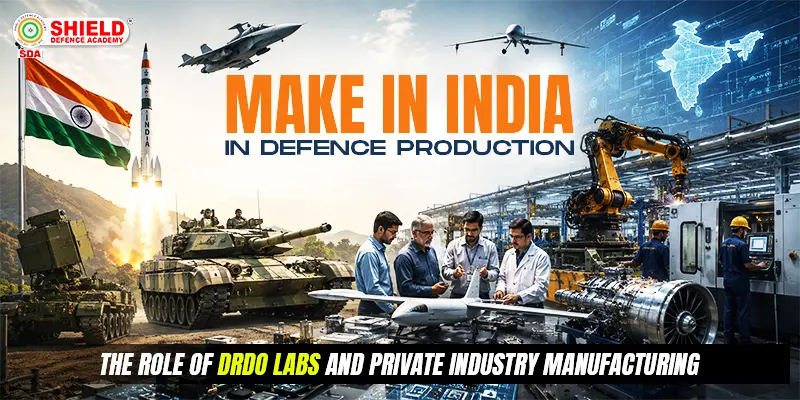
India is becoming stronger in defence manufacturing through the Make in India initiative. Today, DRDO laboratories, defence public sector companies as well as private industries are working together to develop advanced military equipment within the country. This not only reduces dependence on imports but also creates better opportunities for innovation, employment and national security. Understanding this ecosystem is important for every defence aspirant.
Why Make in India Matters in Defence Production?
India has one of the world’s largest armed forces and on the other hand modern defence equipment is essential for national security. Earlier, the country depended heavily on imports for fighter aircraft, missiles, tanks and communication systems. The Make in India initiative has changed this approach. Today, the government is encouraging indigenous defence manufacturing so that more weapons and military technologies are developed within India. As a result, the country is becoming more self-reliant while strengthening its defence capabilities. Some major objectives include-
- Reduce dependence on imported defence equipment
- Promote indigenous technology
- Strengthen national security
- Generate employment opportunities
- Encourage exports of defence products
- Support innovation and research
Key Pillars of India’s Defence Manufacturing
India’s defence manufacturing ecosystem is built on the combined efforts of different organisations. To make you understand key pillars Shield Defence Academy, top defence academy in India is all there for you.
| Organisation | Major Responsibility |
| DRDO | Defence research and technology development |
| Indian Armed Forces | Operational requirements and testing |
| DPSUs | Large-scale defence manufacturing |
| Private Industries | Manufacturing, innovation and technology support |
| Ministry of Defence | Policy and project implementation |
Together, these organisations ensure that modern defence systems are designed, tested and manufactured in India.
Role of DRDO Labs in Defence Development
The Defence Research and Development Organisation (DRDO) plays a vital role in India’s defence sector. It develops advanced military technologies required by the Army, Navy and Air Force. DRDO works through several laboratories located across India, each focusing on specialised research. Shield Defence Academy, the best NDA coaching classes in Lucknow is presenting major areas where DRDO contributes. Over the years, DRDO has successfully developed several indigenous systems that have strengthened India’s defence preparedness.
- Missile technology
- Radar systems
- Electronic warfare
- Artificial Intelligence
- Combat vehicles
- Naval systems
- Unmanned aerial vehicles (UAVs)
- Communication equipment
Major Contributions of DRDO
DRDO has developed many important defence technologies that are now being used by the Indian Armed Forces. Some notable achievements include –
- Agni Missile Series
- Prithvi Missile
- Akash Air Defence System
- BrahMos (joint development)
- Pinaka Multi-Barrel Rocket Launcher
- Light Combat Aircraft support technologies
- Anti-drone systems
- Electronic surveillance equipment
Consequently, these projects have reduced India’s dependence on foreign defence technology. If you are a defence aspirant and more serious about your preparation, knowing these is very important. Shield Defence Academy is all there for you to help and make you understand.
Growing Role of Private Industry Manufacturing
Along with DRDO, private companies have become important partners in defence production. Today, several Indian companies manufacture defence equipment, aircraft components, electronics, vehicles, drones and communication systems. Private industries contribute through –
- Defence manufacturing
- Research collaboration
- Precision engineering
- Aerospace technology
- Defence electronics
- Weapon system components
- Maintenance and support
As government policies continue to improve, private participation in defence manufacturing is increasing rapidly.
Benefits of Private Sector Participation
Private companies bring innovation, faster production, and advanced manufacturing technologies. Some major benefits are –
- Faster project execution
- Better technology adoption
- Increased competition
- Higher production quality
- Job creation
- Export opportunities
- Improved supply chain efficiency
Therefore, collaboration between DRDO and private industries has become essential for building a modern defence ecosystem.
How DRDO and Private Industry Work Together?
Modern defence production depends on collaboration rather than working independently. The process generally follows these stages –
- Armed Forces define operational requirements
- DRDO develops the technology
- Private companies manufacture components
- Defence Public Sector Units support production
- Equipment undergoes field trials
- Final systems are inducted into the Armed Forces
This coordinated approach ensures timely delivery of reliable defence equipment.
Impact of Make in India on Defence Aspirants
Many students preparing for NDA, CDS, AFCAT and SSB interviews are asked questions about India’s defence capabilities and indigenous technologies. Understanding the Make in India initiative helps aspirants in multiple ways –
- Improve current affairs knowledge
- Perform better in SSB interviews
- Understand defence technology
- Build confidence during group discussions
- Develop awareness about national security
Therefore, Shield Defence Academy, NDA foundation coaching classes in Lucknow emphasizes on staying updated with defence manufacturing developments is becoming increasingly important.
Shield Defence Academy- Building Defence Awareness Along with Exam Preparation
Preparing for defence exams is not limited to solving written questions. Aspirants must also understand India’s military developments, defence technology and current national security initiatives. At Shield Defence Academy, top NDA CDS coaching classes in Lucknow. Here students receive guidance that goes beyond classroom preparation. The academy focuses on –
- NDA Coaching
- CDS Coaching
- SSB Interview Preparation
- Current Affairs Classes
- Weekly Mock Tests
- Personality Development
- Defence Awareness Sessions
- Expert Faculty Guidance
This integrated learning approach helps students prepare confidently for both written examinations and officer-level interviews.
Future of Defence Manufacturing in India
India’s defence manufacturing sector is expected to grow significantly in the coming years. Increased investment in research, advanced technologies and indigenous production will make India a stronger defence manufacturing hub. Future focus areas include –
- Artificial Intelligence
- Robotics
- Cyber Security
- Drone Technology
- Space Defence
- Advanced Missile Systems
- Indigenous Aircraft Manufacturing
These developments will strengthen India’s strategic capabilities while creating new opportunities for skilled professionals.
Conclusion
The Make in India initiative has transformed India’s defence manufacturing sector by promoting indigenous production and reducing dependence on imports. DRDO continues to lead research and innovation, private industries are playing an equally important role in manufacturing advanced defence systems. Together, they are building a stronger, more self-reliant India. For defence aspirants, Shield Defence Academy, top defence training classes in India emphasizes that understanding this ecosystem is valuable not only for competitive exams but also for developing a deeper appreciation of the nation’s defence capabilities.
FAQs
- What is the main objective of the Make in India initiative in defence?
Its main objective is to increase indigenous defence production, reduce imports, strengthen national security and promote technological innovation within India.
- What is the role of DRDO in defence production?
DRDO develops advanced defence technologies, including missiles, radars, drones, communication systems and electronic warfare equipment for the Indian Armed Forces.
- Why are private industries important in India’s defence manufacturing?
Private industries improve manufacturing capacity, introduce modern technology, create employment, support exports and work with DRDO to develop advanced defence equipment.